 Click Allow to get more information on Of Phone Services for free!



Who in a Household Can Sign up for the Lifeline Program?
Advertisement
The Lifeline program is a part of the Universal Service Fund (USF), which supports communications services for low-income consumers who are eligible to receive discounts on the cost of monthly phone service in every state, territory, and commonwealth, as well as on Tribal lands. One of the most frequently asked question among qualified households is “How many people in a household can get Lifeline assistance?” The response hinges on a number of factors: how many are in your household, what is your income and the program rules established by the Federal Communications Commission (FCC).
1. One Benefit Per Household
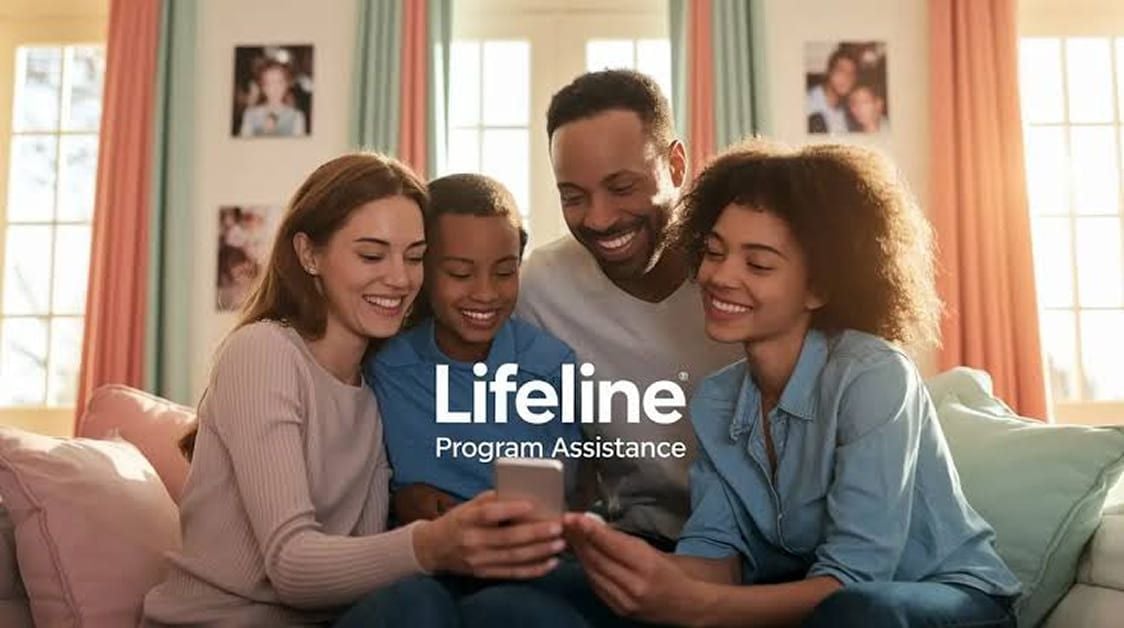
One of the cardinal rules of the Lifeline program is that only one Lifeline discount is permitted per household. In other words, if several members of a family qualify for the benefit on their own, only one of them can get it. The F.C.C. defines a “household” as a group of people who live together and share income and expenses, so roommates, spouses or family members under one roof are usually counted as a single household. But there are some exceptions. If a member of your household is enrolled in a federal assistance program such as Medicaid or SNAP (Supplemental Nutrition Assistance Program), they may also be eligible for an added benefit through the Affordable Connectivity Program (ACP), which offers a separate discount on internet services. That is, a family can theoretically access both Lifeline and ACP benefits, but still only get one discounted Lifeline phone or internet.
2. Exceptions for Separate Households
In certain cases, several people who live at the same address can still be eligible for separate Lifeline benefits if they can show that they are separate economic households. For example:
- College students who live in dorms or shared housing but support themselves financially might be eligible.
- Survivors of domestic violence living in shelter or transitional housing can apply on their own.
- Roommates who do not pool their finances could each qualify if they meet the income requirement.
Such applicants cannot be proven to be “independent” only if applicant provides documentation that they are otherwise eligible on their own, such as filed taxes separately from family, lease or may show they receive a type of public assistance separately from other family members.
3. Preventing Exploitation and Duplicate Receipts
Lifeline is a program that actively safeguards against duplicate support and cross-checks clarified by national databases. If multiple members of a household apply, additional applications may be denied, and the household may be disqualified from benefits completely. To avoid those pitfalls, applicants should first make sure someone else in their home is not already enrolled, before applying.
So, in short, the Lifeline program provides for just one discount for a household, and there are very few exceptions for independent economic units. Several individuals living in the same home may be eligible for the program to compensate for this loss, but only one benefit is allowed in order to distribute benefits equitably. Families should be very mindful when considering house eligibility rules such as this so they do not become blinded and end up losing this important support. For people who need even more support, the Lifeline program can be used in addition to ACP to help save more money on their vital communication services.