 Click Allow to get more information on Of Phone Services for free!



-
Apple iPhone Air

-
Apple iPhone 17 Pro Max

-
Apple iPhone 17 Pro

-
Apple iPhone 17

-
POCO X6 Pro 5G

-
Xiaomi 14 Ultra



 Pixel 11 Pro


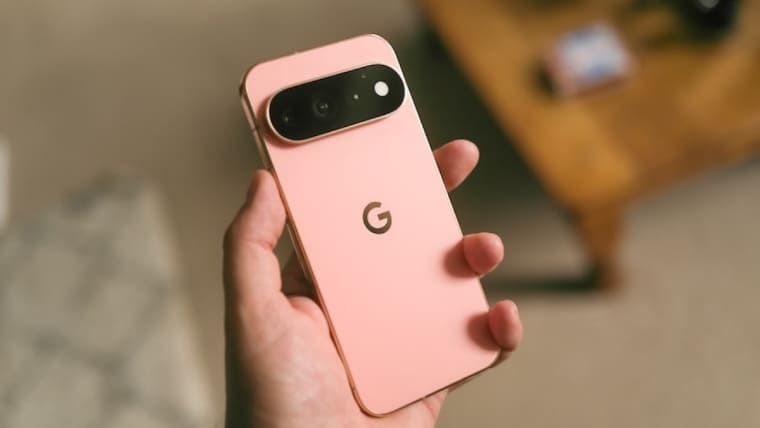
The Pixel 11 Pro doesn't feel like a significant upgrade over the Pixel 10 Pro in actual use, but rather an upgraded version. Google retains its 6.3-inch compact Pro chassis design, but the re-designed all glass camera bar is more of an external layout change rather than a shift in ergonomics. The old temperature sensor disappears and is replaced by HiLight, an LED intended to provide visual feedback during calls and Gemini interactions. The feature is distinctive, although its practical value is less important than the camera system.
The LTPO OLED display is one of the phone’s clearest hardware improvements. It peaks at 3,600 nits brightness and has adaptive 1-120Hz refresh rate to ensure good readabilty outdoors and excellent motion responsiveness, for low refresh efficiency. Brightness is higher than Pixel 10 Pro, while resolution and screen size remains rather well-known. Samsung’s Galaxy S26 Ultra still offers a larger display and more aggressive hardware specifications, so Pixel 11 Pro wins primarily through software integration rather than sheer panel numbers.
Tensor G6 provides the computational foundation. The phone's performance in messaging, multitasking, photo, navigation and gaming duties is consistent in heavy usage. Benchmark leadership is not its goal: Snapdragon-powered rivals continue to have an edge in sustained graphics performance. The relevant improvement is Google’s image signal processing and on-device AI. Rambler delivers unusually fast voice dictation, while Gemini gains Proactive Assistance capabilities intended to anticipate tasks. These tools are impressive when they work, but Proactive Assistance can be inconsistent and depends heavily on context.
The camera system is the biggest selling point Pixel 11 Pro offers over the regular Pixel 11. It is equipped with a 48MP ultrawide sensor and a larger 48MP 5x telephoto sensor, in addition to the 50MP main camera. It has the ability to gather more light than its predecessor and smoother transitions between lenses. It delivers very good image quality at 10x, and the 120x Pro Zoom is only useful for very distant subject where detail is not all that relevant. Beyond roughly 30x, aggressive computational processing becomes increasingly obvious. Camera Looks adds controlled photographic styling, while Magic Capture can pull high-quality frames from video.
Battery performance is solid rather than class-leading. The 4,850mAh cell supports a full day for typical mixed use, and Extreme Charge Mode makes replenishment faster when enabled. Wireless charging reaches 25W, a substantial improvement over previous Pixels, with Pixelsnap adding magnetic convenience for compatible accessories. Wired charging is now faster but not as fast as a few of China's flagship competitors.
In summary, Pixel 11 Pro is a solid choice for photography enthusiasts, AI lovers, and those seeking a compact flagship with extended support. However, Pixel users won't find the hardware upgrades to be drastic enough to warrant an upgrade.

|
Brighter 3,600-nit LTPO display significantly improves outdoor viewing in sunlight. |
|
|
Tensor G6 delivers dependable everyday performance and stronger AI processing. |
|
|
Larger telephoto sensor improves low-light detail at useful zoom levels. |
|
|
Five-times optical zoom provides genuine versatility for distant photography subjects. |
|
|
120x Pro Zoom extends framing options for extremely distant subjects. |
|
|
Twenty-five-watt wireless charging meaningfully improves previous Pixel charging convenience overall. |

|
Base model includes only 12GB RAM despite premium flagship pricing. |
|
|
Tensor G6 remains behind Snapdragon rivals during sustained graphics workloads. |
|
|
120x Pro Zoom becomes visibly artificial beyond approximately 30x magnification. |
|
|
Proactive Assistance can behave inconsistently across different real-world contextual situations. |