 Click Allow to get more information on Of Phone Services for free!



-
Apple iPhone Air

-
Apple iPhone 17 Pro Max

-
Apple iPhone 17 Pro

-
Apple iPhone 17

-
POCO X6 Pro 5G

-
Xiaomi 14 Ultra

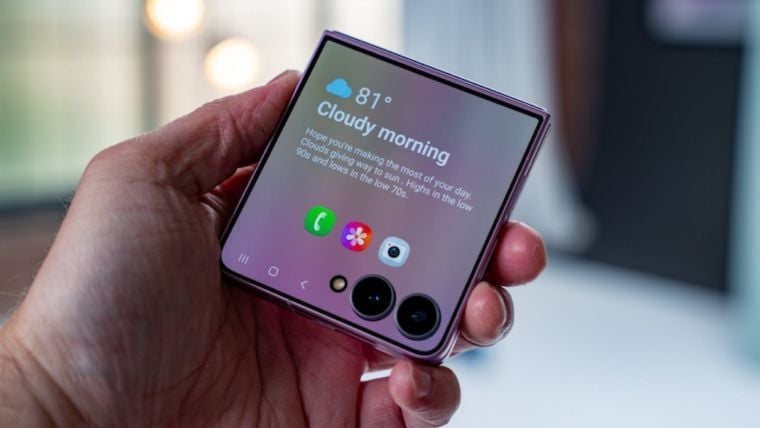


 Pixel 11 Pro Fold


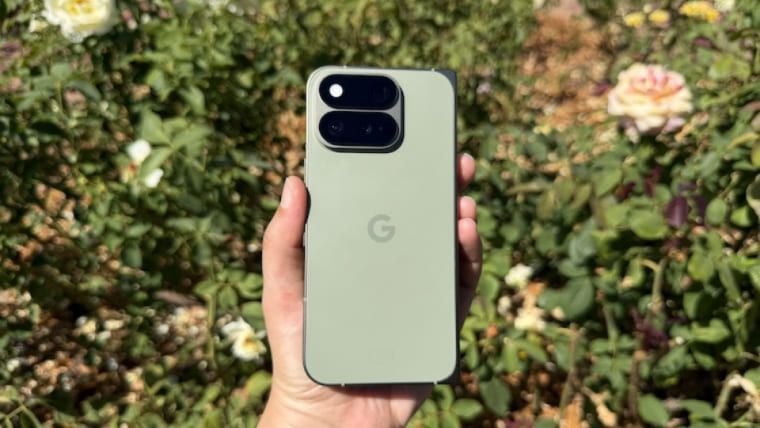
Design remains the biggest contradiction of the Pixel 11 Pro Fold. The company switched the back panel of the phone to a glass-fiber composite which is considered almost crack-resistant. The good news here is that the device weighs 239 grams – that is, about ten percent lighter than the 258 grams of the Pixel 10 Pro Fold. Bezels have also become slimmer. Despite all this, at 10.1 mm (folded), the phone seems to be much thicker and chunkier than the Galaxy Z Fold 8 (201 grams, 9.7mm) or the Z Fold 8 Ultra (215 grams, 8.9mm), not to mention the Motorola Razr Fold which is quite similar to the Pixel 11 Pro Fold in size but is a lot sleeker thanks to tapered edges. The side-mounted fingerprint reader, physical SIM tray, magnetic accessory support and water resistant IP68 remain unchanged.
The 6.5-inch exterior and 8-inch interior OLED panels maintain the same resolution but have been significantly improved with a maximum brightness of 3,600-nit (3,000 nits before), and with a new ceramic cover glass on the outside for greater scratch resistance. Outdoor legibility genuinely improves, though the crease across the inner screen persists in bright, contrasty scenes.
However, everything powered by Tensor G6, which according to Google, makes browsing twenty-five percent faster and apps fifteen percent faster. In reality, multi-tasking, split-screen usage, and most games performed well but the games with graphics requirements were able to show framerate drops occasionally and the benchmark results are surprisingly lower than Pixel 10 Pro Fold. The phone ships with minimum 16GB RAM and 256GB storage.
Cameras remain a genuine strength. A new, larger 48-megapixel main sensor anchors a triple system, complemented by fresh Camera Looks color profiles and Magic Capture, an AI mode that continuously records to surface the best stills and a highlight clip automatically. It is superior to many other folding phones when it comes to image quality.
Battery capacity decreased to roughly 4,806mAh from 5,015mAh, leading to a shorter video battery life than Razr Fold, Z Fold 8, and Z Fold 8 Ultra in independent tests. It still charges with the same rate of 30W wired power, but wireless charging increased from 15W to 25W thanks to Qi2 wireless charging technology – welcome upgrade for desk-pad usage, although the own Motorola 50W wireless charger still wins.
New features like bubble-like floating multitasking window and multilingual Rambler voice-typing tool is something that is useful in daily routine. Thus, Pixel 11 Pro Fold is the reliable and dependable refinement and it may not attract those who are not tied to Google ecosystem because they can find better alternatives in the folding market this generation.

|
Body is ten percent lighter than Pixel 10 Pro Fold. |
|
|
New 48-megapixel main sensor delivers sharper, more detailed photos overall. |
|
|
Peak display brightness jumps to 3,600 nits on both screens. |
|
|
Qi2 wireless charging speed nearly doubles to 25 watts total. |
|
|
Tensor G6 brings faster web browsing and quicker app loading. |
|
|
Magic Capture automatically highlights dynamic moments across sports and photos. |
|
|
Rambler voice typing seamlessly transcribes and switches between multiple languages. |
|
|
Glass-fiber composite back is more crack-resistant than the prior model. |

|
Battery capacity shrank from 5,015mAh down to 4,806mAh this year. |
|
|
Chassis feels noticeably chunkier than the Galaxy Z Fold 8. |
|
|
Super Res Zoom tops out at 30x, unlike Pro siblings. |
|
|
Telephoto and ultrawide sensors trail resolution of standard Pixel Pros. |
|
|
HiLight flash feature currently supports only calls and Gemini triggers. |